How Brazilian Coffee Shaped Modern Global Commodity Trade and Culture
Introduction: A Beverage That Rewired World Trade
Few agricultural products have reshaped global commerce as profoundly as coffee. Among the nations that cultivate it, Brazil stands apart as an undisputed titan. For over a century and a half, Brazilian coffee has dictated benchmark prices, driven maritime shipping routes, financed transcontinental railways, and anchored the daily rituals of billions across every continent. What began as an experimental crop planted on humid hillsides near Rio de Janeiro evolved into the engine of a national export economy and, ultimately, the blueprint for modern global commodity trading. Examining this trajectory explains not only why your morning cup is priced as it is, but also how contemporary logistics, financial markets, and consumer cultures were engineered from the ground up.
From Modest Beginnings to a National Industry
Coffee arrived on Brazilian soil in the early eighteenth century, smuggled north from French Guiana into the Amazon basin. For decades, it remained a secondary crop, overshadowed by the lucrative trades of sugar, cane rum, tobacco, and gold. The turning point arrived when agronomists and farmers discovered that the weathered red soils and ideal microclimates of the Paraíba Valley—and later the hyper-fertile terra roxa of São Paulo—produced coffee beans with staggering volume and dependable consistency. By the 1830s, Brazil's export numbers were alarming Caribbean and East Asian competitors. By the 1850s, the country was supplying roughly half of the entire global coffee demand, a market share it has never truly relinquished.
This ascent was meticulously engineered through the convergence of three pillars: land acquisition, workforce mobilization, and heavy transport infrastructure. Massive agricultural estates, known as fazendas, consolidated production and standardized cultivation methods. A massive influx of European immigrants, arriving alongside the complex and painful legacy of enslaved labor which was legally abolished in 1888, formed the backbone of the harvesting workforce. Meanwhile, relentless railway construction pushed inland from the expanding port of Santos, opening up virgin agricultural frontiers every decade. Each component fed the others, forging a self-scaling economic machine that few rival nations could replicate.
Santos and the Birth of Modern Commodity Logistics
At its core, global commodity trade is a massive logistics challenge, and Brazil pioneered solutions decades ahead of its time. The port of Santos evolved into a hyper-specialized industrial nexus designed to channel jute sacks of green coffee from interior warehouses directly into ocean-going cargo vessels. Dedicated freight rail lines converged on the docks with clockwork precision. Warehouses implemented standardized grading systems, allowing international buyers to purchase large lots sight unseen with absolute confidence in the quality and moisture content. Marine insurance, forward shipping schedules, and negotiable warehouse receipts all co-evolved around the demands of the coffee trade.
This infrastructure left a legacy far beyond South America. The grading nomenclature and quality classification metrics devised for Brazilian beans established a universal language for international commodity brokers. When a roaster in Hamburg, London, or New York ordered a specific lot classification, they operated on the certainty that the descriptor meant the exact same thing across oceans. That standardized terminology forms the quiet structural foundation of every modern commodity contract traded today, whether the underlying asset is crude oil, soybeans, iron ore, or cocoa.
The First Great Price Machine: Valorization and Futures
Because Brazil commanded such a dominant share of global supply, a single late frost in São Paulo or an unexpected bumper harvest could send shockwaves through international pricing indexes. Growers and exporters desperately needed financial shields against this volatility. The solution arrived through pioneering organized futures trading, where forward-delivery contracts allowed producers to lock in guaranteed prices and merchants to hedge against catastrophic supply shortages. The São Paulo coffee exchange swiftly became one of the most influential financial clearinghouses of the late nineteenth century.
State intervention soon followed market mechanisms. In 1906, the government of São Paulo orchestrated the historic "valorization" scheme—a massive state-backed intervention where authorities purchased surplus coffee harvests and held them off the market to artificially defend global price floors. It was a bold, unprecedented experiment in macroeconomic supply management and one of the earliest instances of a developing nation leveraging financial instruments to dictate global commodity terms. While the economic results were mixed, the geopolitical precedent was monumental.
Valorization laid bare both the immense economic leverage and the inherent risks of supply concentration. When a single nation controls the majority of an essential global staple, its domestic fiscal policy instantly becomes international weather for importing economies. Consuming nations immediately began strategizing around supply diversification, strategic buffer reserves, and long-term bilateral contracts. Much of the strategic playbook that modern governments apply to energy security and critical minerals was first rehearsed on the trading floors of the global coffee market.
Frost, Fear, and the Politics of Scarcity
Nature frequently intervened with devastating suddenness. A catastrophic frost in July 1975—known historically as the Geada Negra (Black Frost)—decimated millions of mature trees across Paraná and São Paulo, sending world market prices soaring overnight. Similar climatic shocks in 1994 triggered comparable price spikes. These meteorological crises delivered stark lessons to international traders: an overnight freeze in a specific Brazilian plateau could disrupt household budgets on other continents within days. These vulnerabilities catalyzed massive private and public investments in satellite weather forecasting, predictive crop modeling, and the diversification of sourcing origins across Africa and Southeast Asia.
For retail consumers, these shocks manifested as sudden, painful jumps in supermarket prices. For rural producers, they meant years of grueling recovery, stump-replanting, and financial restructuring. For importing governments, they triggered inflationary pressures and difficult debates over trade tariffs and agricultural subsidies. Coffee cemented its status as the ultimate case study in how a fragile, perishable agricultural harvest transmits systemic risk through an interconnected global economy.
Railways, Immigrants, and the Shape of Cities
The coffee economy literally built the physical geography of modern Brazil. Iron rails pushed relentlessly westward, sprouting boomtowns around every station and transforming coastal harbors into bustling metropolises. Waves of European and Asian immigrants—from Italy, Japan, Portugal, Germany, and Lebanon—settled along the dynamic coffee frontier, weaving their culinary traditions, musical forms, and architectural styles into the fabric of regional identity. The massive capital surpluses generated by coffee exports financed Brazil's early industrial revolution, urban electrification, and port modernization.
Yet these achievements came with profound social friction. The rapid expansion of the coffee frontier systematically displaced Indigenous populations and entrenched deeply unequal land ownership patterns. Furthermore, the formal abolition of slavery in 1888 did not instantly translate into equitable labor standards, and nascent worker unions in the coffee belt faced decades of institutional resistance. Any comprehensive analysis of this commodity must hold these dual truths in balance: an engine of extraordinary economic modernization running parallel to deep-seated social inequality.
The Culture of the Cafezinho
Coffee did more than cross oceans and populate balance sheets; it wove itself intimately into the fabric of daily social life. The cafezinho—a small, intensely strong, sweetened cup of coffee served steaming at a bakery counter or offered instantly to guests in a home—became the ultimate Brazilian symbol of hospitality and warmth. It punctuates the workday, softens negotiations, and marks the fluid boundary between professional and personal life. Across households, the domestic ritual of brewing and sharing coffee carries the exact cultural weight that formal tea ceremonies hold in other parts of the world.
Regional variations add cultural richness. In the urban south, espresso and coffee with steamed milk are morning staples. In the rural interior, traditional methods involving wood-fired stoves and cloth filters remain stubbornly alive. The agricultural calendar of the harvest influences local festivals, folk music, and even the idiomatic expressions of everyday speech. In Brazil, coffee is never merely a commercial sector; it is a shared social grammar.
Branding a Nation Through a Bean
Export promotion transformed coffee into a sophisticated instrument of national soft power. Mid-twentieth-century marketing campaigns trained international consumers to associate Brazilian origins with agricultural reliability, abundance, and warmth. Producer cooperatives established rigorous quality programs, launched regional cupping competitions, and funded agronomic research into disease-resistant cultivars. The result was a national brand equity that routinely outlasted individual economic crises and political shifts.
This institutional reputation translated directly into diplomatic leverage during international trade negotiations. Brazil emerged as a leading voice within global commodity organizations, fiercely advocating for equitable pricing mechanisms, fair trade terms, and reduced tariff barriers in major consumer markets. Through coffee, Brazil secured a permanent seat at multilateral tables where global agricultural policy and development finance were shaped.
The Third Wave and the Specialty Turn
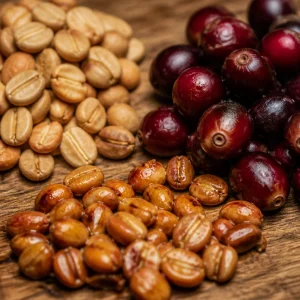
When the global specialty coffee movement gained momentum in the early 2000s, cynical market analysts predicted Brazil would struggle to adapt. The country’s international reputation had been built firmly on high-volume, commercial-grade consistency rather than delicate terroir-driven nuance. That assumption proved entirely unfounded. Growers in regions like Minas Gerais, Espírito Santo, and Bahia began experimenting aggressively with honey and natural processing methods, controlled anaerobic fermentations, and single-varieties like Yellow Bourbon. Cup scores climbed rapidly, and Brazilian microlots began appearing on the menus of the world's most discerning specialty roasters.
Advanced traceability technologies accelerated this pivot. Digital lot tracking, blockchain verification, and direct-trade relationships empowered specialty buyers to pay steep premiums directly to specific farms. Smallholders who once sold anonymously into massive bulk blends could now establish independent brand identities. Sustainability and ethical certification programs gained widespread traction, though industry critics rightly emphasize that certification alone cannot fully resolve systemic challenges regarding farmworker wages and land tenure.
Lessons for Modern Commodity Trade
The historical trajectory of Brazilian coffee offers critical, practical takeaways for anyone analyzing contemporary global markets. First, physical infrastructure must precede commercial scale; ports, railways, and storage terminals turn raw potential into export volume. Second, standardization builds institutional trust; shared grading rules enable frictionless long-distance trade without endless physical inspections. Third, market concentration creates immense pricing leverage, but also introduces systemic fragility.
Fourth, sophisticated financial instruments are just as vital as favorable soil chemistry; futures contracts, hedging desks, and risk management tools dictate whether producers survive punishing market cycles. Fifth, corporate and national reputation compounds over decades of reliable delivery, generating goodwill that short-term marketing budgets cannot buy. Sixth, cultural embedding is an underrated commercial asset; when a traded product becomes an intrinsic part of daily human rituals, it develops a resilience that purely transactional goods never achieve.
Looking Ahead: Climate, Technology, and Identity
The next chapter of this commodity epic is being drafted today. Accelerating climatic shifts and rising global temperatures are pushing viable cultivation zones toward higher elevations, altering traditional harvest schedules across the plateau. Water security, emerging pest pressures, and persistent rural labor shortages are forcing significant capital investments. Simultaneously, precision agriculture, satellite yield monitoring, and advanced fermentation science are unlocking unprecedented gains in cup quality and operational efficiency.
Consumer expectations are evolving in tandem. Modern buyers demand radical transparency: they want to know the exact farm, the specific varietal, the processing method, and the socio-environmental conditions under which their beans were harvested. This insatiable demand for traceability is reshaping supply chains from origin to cup, creating powerful new opportunities for progressive, well-organized cooperatives. Brazil is uniquely positioned to lead this transformation, provided the industry addresses the enduring social and environmental questions that have shadowed the bean since colonial times.
Conclusion: A Small Bean With Global Reach
Brazilian coffee is frequently categorized simply as a soft commodity, but that clinical label drastically understates its historical footprint. It helped invent modern export logistics, shaped the institutional architecture of international futures markets, tested the absolute limits of state price intervention, and embedded itself deeply into the daily routines of billions. It financed railways and skylines, generated immense wealth alongside deep social scars, and repeatedly reinvented itself when global markets demanded evolution.
The next time you taste an espresso, consider the vast distance it traversed: the sunlit hillside, the raised drying patio, the cooperative cupping lab, the steel shipping container, the artisanal roastery, and finally your porcelain cup. Each distinct step exists because generations of growers, engineers, traders, and policymakers built the machinery to make it possible. That is what a truly global commodity looks like, and Brazil's coffee remains its most definitive, enduring masterpiece.
"