The Role of Barista Competitions in Elevating Global Coffee Standards
At first glance, barista competitions look like high-stakes theater. There are blinding stage lights, a digital countdown clock ticking on the wall, and a nervous professional meticulously pouring microfoam into a tiny cup. But look past the performance and you will find something far more powerful: a relentless global testing ground where coffee extraction theories are challenged, measured, optimized, and ultimately filtered down to cafes everywhere.
Why Barista Competitions Matter Beyond the Trophies
The most important thing to grasp about professional coffee championships is that they are not ultimately about winning gold. They are about establishing operational benchmarks that the rest of the industry can chase. When a national or world champion introduces a novel routine on stage, that routine immediately becomes a living reference point. Specialty bars across different continents adopt the technique. Specialty roasters adjust their development profiles. Professional trainers redesign their curricula around these breakthroughs.
This is how modern coffee standards evolve—not through heavy-handed rulebooks, but through collective iteration. One bold idea introduced on stage becomes industry standard within two or three seasons, only to be challenged and replaced by the next wave of innovation. The competition stage serves as an unforgiving filter. Flawed ideas and gimmicks disappear quickly because certified judges evaluate them under extreme time pressure and rigorous scrutiny.
A Structured Stage Governed by Strict Metrics
Every serious coffee championship operates on a transparent, highly detailed scoring matrix. Judges evaluate identical performances using rigorous criteria, scoring competitors across multiple dimensions: cup profile clarity, sensory balance, technical precision, workflow efficiency, and depth of product knowledge. Crucially, competitors must verbally articulate what they did, why they chose specific parameters, and how those decisions altered the flavor in the cup.
This strict scoring architecture acts as the quiet engine of industry-wide progress. Because the scoresheets are publicly available, any independent cafe owner or head trainer can download the criteria and adapt them for staff training sessions. A tool that costs nothing to access immediately raises the operational floor for an entire local market, replacing guesswork with scientific methodology.
The Espresso Round: The Ultimate Test of Precision
Espresso extraction remains the most difficult discipline to master in a cafe and the easiest to compromise. On the competition stage, a barista must serve precise flights of espresso within an uncompromising time window. Each shot is blind-tasted and scored for tactile balance, sweetness intensity, flavor clarity, and clean aftertaste.
To survive this level of scrutiny, competitors learn to isolate and control variables down to microscopic margins. They measure dry coffee doses to the tenth of a gram. They log extraction times, brew ratios, and water temperature profiles. They taste, adjust, and taste again. Back in their home cafes, these obsessive habits translate directly to the daily workflow. Digital scales become standard equipment on every bar. Grinders are calibrated daily. Informal habits are replaced by codified, repeatable recipes.
The ultimate outcome of this rigorous testing ground is not a single, miraculous shot of espresso. It is a completely repeatable production process. Repeatability is what transforms a lucky, accidental cup into a reliable daily standard, and reliability is the foundation of any successful coffee business.
Milk Texturing and Microfoam Discipline
Milk-based beverages account for the vast majority of commercial cafe revenue, and competition judges evaluate them with uncompromising strictness. The milk beverage round rewards flawless microfoam texture, precise serving temperature, and harmonious integration with the espresso base. Foam must be impossibly silky, never stiff or bubbly. The drink must taste naturally sweet without added syrups. Latte art is evaluated, but only after flavor balance and structural integrity are secured.
Competitors spend months isolating this single skill. They study steam tip placement angles, precise air injection rates, and thermal cutoff points. They learn to identify the exact aroma of overheating milk long before a thermometer registers the change. These micro-lessons travel straight back to the neighborhood espresso bar, quietly elevating hundreds of customer drinks every single day.
Signature Beverages Built on Purpose
The signature beverage round generates the highest levels of both excitement and skepticism. It demands raw creativity, which can occasionally veer into theatrical gimmicks. However, the top-tier competition entries always solve a genuine sensory challenge. Competitors use culinary techniques or botanical infusions to highlight elusive fruit notes in an unruly coffee, or to soften aggressive bitterness without relying on dairy fats.
Successful concepts from this round frequently transition into permanent seasonal menus. They provide cafe teams with a low-risk framework to experiment with flavor combinations that customers might otherwise hesitate to order twice. In this context, the signature round functions as an agile research and development lab equipped with a stopwatch.
Brewing and Sensory Rounds Cultivate Expert Palates
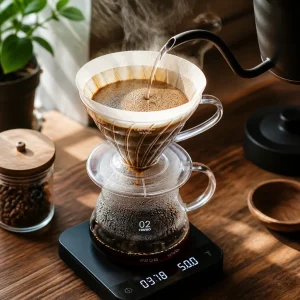
Modern coffee events also place heavy emphasis on filter brewing and rigorous sensory evaluation. Competitors must dial in a manual pour-over under observation, justify their exact mineral water chemistry, and explain their grind distribution choices. Many formats also include blind tasting modules designed to identify distinct botanical varieties, processing methods, and geographical origins.
This is vital because professional sensory analysis is a trainable discipline, not an innate magical gift. When baristas taste coffees deliberately, debate flavor notes, and defend their conclusions, they begin asking deeper questions further up the supply chain. They question farmers about harvest dates and cherry ripeness. They ask roasters about development time ratios. They question equipment suppliers about water filtration chemistry. True intellectual curiosity spreads through an entire cafe team like a positive contagion.
How Competition Metrics Reach Your Local Cafe
Even if you never step foot inside a national championship arena, you taste its direct influence every time you visit a well-run cafe. Consistent espresso recipes originate from this high-performance culture. Superior milk texture, precise water filtration systems, calibrated grinding equipment, and structured staff tasting sessions all trace their lineage back to the same competitive mindset.
Professional training programs naturally adopt competition terminology because it provides undeniable clarity. Instead of telling a junior staff member that a coffee simply "tastes nice," an experienced trainer uses precise language: high perceived sweetness, medium creamy body, bright citric acidity, and a sparkling clean finish. Clear terminology accelerates the coaching process. Faster coaching raises overall quality across the entire shop, ensuring that excellence is not dependent on a single talented individual.
Customers notice these improvements intuitively, even without knowing the technical origin. Drinks taste identical on a chaotic Monday morning and a relaxed Thursday afternoon. Baristas explain flavor profiles without hesitation or confusion. That systemic consistency is the ultimate reward of the competition ecosystem.
Actionable Feedback That Shapes Careers
Certified competition judges provide detailed written evaluation notes for every competitor. While harsh notes can sting, they are ruthlessly specific. A competitor might discover that their extraction suffered from channeling, that their milk was stretched at too high a temperature, or that their delivery was disorganized. This level of granular, unbiased feedback is extraordinarily rare in professional life.
Many veteran baristas note that these evaluation sheets proved far more valuable than the final tournament ranking. The feedback provided a concrete roadmap for the next six months of professional growth. Armed with these insights, competitors frequently transition into head training roles, consult for roasters, or launch their own independent cafes with an uncompromising vision of quality. Many eventually become judges themselves, successfully closing the educational loop.
The Ripple Effect on Roasters and Producers
The influence of barista competitions extends far beyond the physical espresso bar. Specialty roasters watch routines meticulously because the stage reveals the absolute flavor potential of a specific green coffee lot. A remarkably clean, washed Ethiopian coffee that dominates a national championship inspires roasters to adapt lighter, more delicate roast profiles across their entire commercial product lineup.
Coffee producers experience direct economic benefits as well. When a specific farm's lot performs exceptionally on an international stage, the farm gains instant global recognition and vital bargaining power. Green coffee buyers become increasingly invested in absolute traceability and direct trade relationships. That elevated demand supports premium farm-gate prices, which in turn finances better agricultural practices, improved processing infrastructure, and sustainable labor conditions.
Team Culture and Daily Shop Training
Hosting or preparing for a competition gives an entire cafe staff a unifying, shared project. Team members practice extraction routines together after closing time. Senior baristas mentor junior staff. Everyone learns how to taste critically and discuss flavor notes with total confidence. Even a cafe that has no ambition to send a representative to a national stage can easily adopt this exact weekly training rhythm.
The habit itself is straightforward. Brew three different coffees side by side. Write down precise flavor descriptors independently. Compare your sensory notes as a team. Repeat the process next week. Small, consistent deliberate practice builds technical skill exponentially faster than a single weekend of intense studying.
Constructive Criticism and Market Realities
Valid criticisms of the competition circuit do exist. Championship preparation can be financially exhausting, and the custom equipment utilized on stage is often economically out of reach for independent community shops. Furthermore, certain legacy scoring formats occasionally reward theatrical performance speed over practical daily service efficiency. There remains a genuine risk of glamorizing an idealized version of coffee that everyday consumers will rarely experience in a neighborhood shop.
Professional burnout is another legitimate concern. Training for elite events while working full shifts behind the bar places heavy mental and physical stress on individuals. Forward-thinking cafe programs now mitigate this by distributing the preparation workload across an entire team, treating the event as a collaborative learning project rather than an individual trial.
Industry diversity and accessibility are also ongoing priorities. Prohibitive travel expenses and high entry fees have historically limited who can participate. In response, organizers have actively expanded regional qualifying events, secured brand sponsorships, and introduced accessible community throwdowns with minimal entry barriers. Progress is gradual, but the demographic makeup of the competitive stage is steadily broadening.
Looking Ahead: The Future of Coffee Standards
Future barista competitions will place even greater emphasis on environmental sustainability and supply chain transparency. Judges already evaluate metrics related to water conservation and waste minimization. Upcoming competition rulebooks will likely reward lower energy consumption profiles and more granular sourcing narratives.
Technology will continue to transform the competitive landscape. Digital pressure profiling, real-time extraction sensors, and advanced brewing apps are already mainstream tools. The inherent risk is that digital tools might replace human sensory judgment; however, the most successful competitors will use data strictly to support their palate, never to hide behind it.
A Concluding Thought
A physical trophy eventually collects dust on a shelf, but an elevated industry standard continues working every single day. Barista competitions matter because they convert private, isolated discoveries into accessible public knowledge. They provide the global coffee industry with a shared vocabulary, a mutual benchmark, and an endless motivation to keep improving.
The next time your morning espresso tastes exceptionally balanced and your milk microfoam feels like liquid silk, remember where those precise habits were rigorously tested. Somewhere, under glaring stage lights and a relentless ticking clock, a dedicated professional practiced until excellence became second nature. Then, the rest of us simply enjoyed the remarkable result.
"